



 Share Profile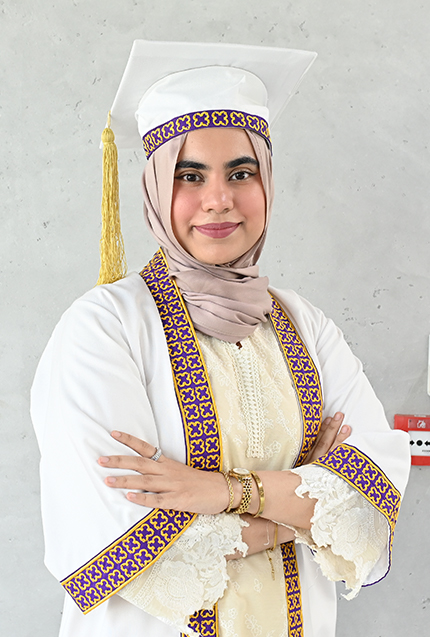
ANUM AFRA
Aspiration Statement
I am passionate about using research and evidence-based policy planning to create initiatives that drive sustainable development, particularly by empowering youth with the tools needed to address global challenges.
Core Skills
- QGIS, Qualitative and Quantitative Research, Scientific Writing, STATA
Academic Awards / Achievements
- Deans List Awards Fall 2021 - Fall 2024 Presidents List Awards 2022 - 2024 High Academic Achievement Scholarship Awards Fall 2021, Fall 2022 - Fall 2024
Experience
Leadership / Meta-curricular
- Director of Content, Habib University Model United Nations, 6th Iteration Head of Marketing and Design, Habib University Sustainability Club
Internship / Volunteer Work
- Program Manager, Education Initiatives, Educators' Community - Global Communications Manager, Educators' Community - Global (June 2024 December 2024) Research Intern, Al-Khidmat Karachi, Non-Governmental Organization (June 2022 ��� August 2022) Mental Health Intern, Soul Space
Publications / Creative Projects
- Created a short documentary on decline of cinemas and social production of space for course comparative urbanism, Fall 2024 Wrote research paper on how censorship has shaped the Pakistani film narrative under STRP 2 supervised by Tajreen Midhat, 2024 Wrote research paper on the educational landscape of Sindh through geographical mapping under STRP 1 supervised by Dr Muhammad Aatir Khan, 2023
Final Year Project
Project Title
Rebuilding the Self: A Phenomenological Study on Resilience in Young Adults Following Adolescent Bereavement in Karachi, Pakistan
Description
Bereavement during adolescence, a transformative stage of cognitive, emotional, and social development, can disrupt an individuals sense of identity as well as their short- and long-term stability. Resilience, viewed as the ability to adapt and thrive in adversity, plays a crucial role in coping with such loss during this phase. However, the resilience displayed by bereaved adolescents in Karachi, Pakistan, remains largely unacknowledged and underexplored. This study adopts a phenomenological approach to amplify the voices of young adults who lost an immediate family member (parent or sibling) during adolescence. Framed within resilience theory, the research investigates how resilience manifests not only as an outcome but also as an ongoing process, identifying individual-level and environmental factors, specifically informal and formal support networks, that contribute to its development. The study offers recommendations for policymakers, educational institutions, and communities to provide accessible resources that facilitate the healthy transition from adolescence to young adulthood.